TL;DR
- Final Fantasy Resonance is a turn-based RPG and the first mainline title using the HD-2D engine, set to release on October 22, 2026.
- The game is a ground-up remake of the first story arc from Final Fantasy Brave Exvius, featuring no gacha mechanics and a premium single-player experience.
- It introduces a new combat system with a visible timeline and a Stagger/Resonance mechanic that enhances tactical depth in battles.
Disclaimer: This summary was created using Artificial Intelligence (AI)
Final Fantasy Resonance is the turn-based RPG that a significant slice of the FF fanbase has been asking for since the series went action-heavy, and Square Enix announced it exactly when nobody expected it: the June 9, 2026 Nintendo Direct.
The response online was immediate. Decades of accumulated demand for a proper turn-based mainline entry hit the internet at once, and for good reason. This is the first Final Fantasy built in the HD-2D engine, the same visual framework behind Octopath Traveler, Triangle Strategy, and Live A Live, and it arrives October 22, 2026 on every major platform.
It takes the story of Final Fantasy Brave Exvius Season 1, rebuilds it completely, strips out every gacha system, and delivers a premium single-player RPG with no microtransactions and no monetization beyond the purchase price.
What is Final Fantasy Resonance?
Final Fantasy Resonance is a ground-up remake of the first story arc from Final Fantasy Brave Exvius, the mobile gacha title that ran from 2015 until Square Enix shut the servers down in 2025.
That history matters because the original game was built around energy systems, summon banners, unit dupes, and the full predatory mobile gacha loop. None of that survives in Resonance.

Square Enix tasked developer Lancarse with rebuilding the Brave Exvius story as a standalone console RPG with new overworld exploration, a redesigned combat engine, dozens of hours of side content, and zero monetization hooks beyond the base price. The official line from Square Enix is explicit: this is not a port. It is a rebuilt experience.
It is also, officially, the first mainline Final Fantasy to use the HD-2D art style that Square Enix has been refining since Octopath Traveler in 2018.
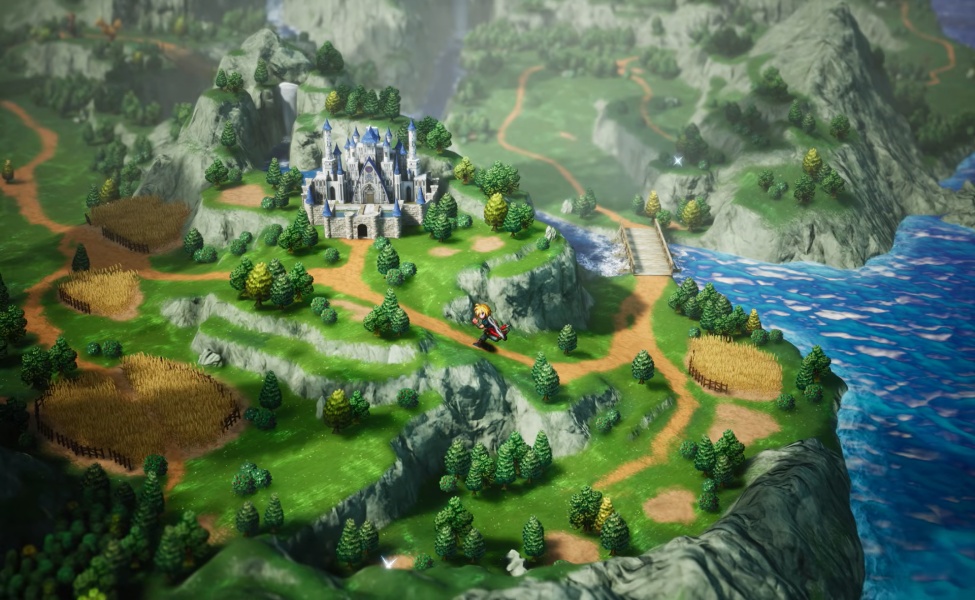
That counts for more than it might seem. HD-2D gives you sprite-based characters moving through detailed 3D environments with dramatic depth-of-field effects, dynamic camera sweeps, and lighting that makes pixel art look cinematic rather than retro.
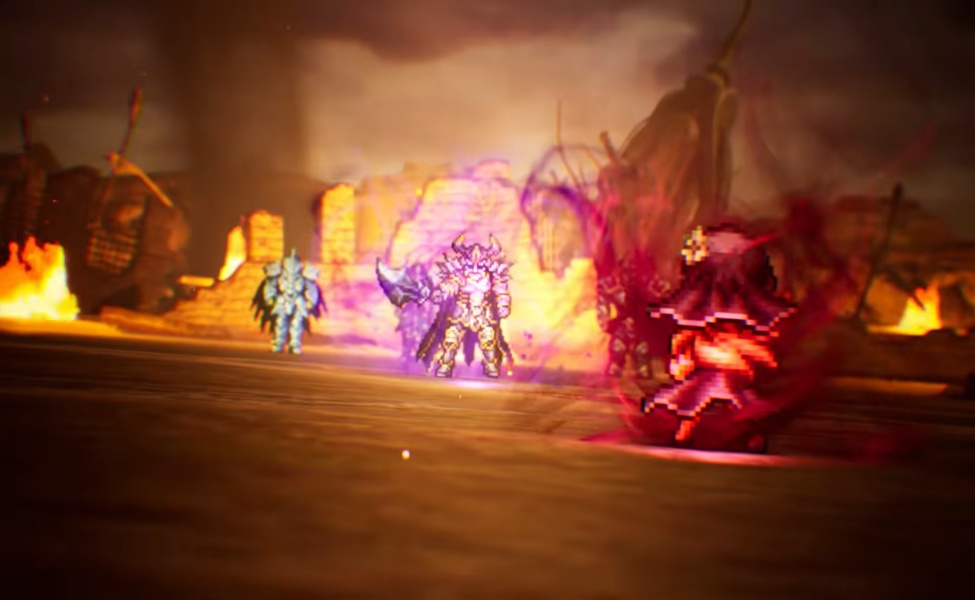
Octopath Traveler used it well. Dragon Quest III HD-2D pushed the fidelity further. Resonance takes another step by adding pixelized 3D models during Vision summons and major boss sequences, giving those moments a visual weight the format has not had before.
Producer Keisuke Nakashima and director Hiroto Furuya have been open about their design references. Final Fantasy V’s job system is their stated primary inspiration for party customization, and that alignment shows clearly in how the Visions mechanic functions.
Players who spent time in FFV multi-classing across all 22 jobs to build something like a Blue Magic / Time Mage hybrid will recognize the same underlying thinking immediately.
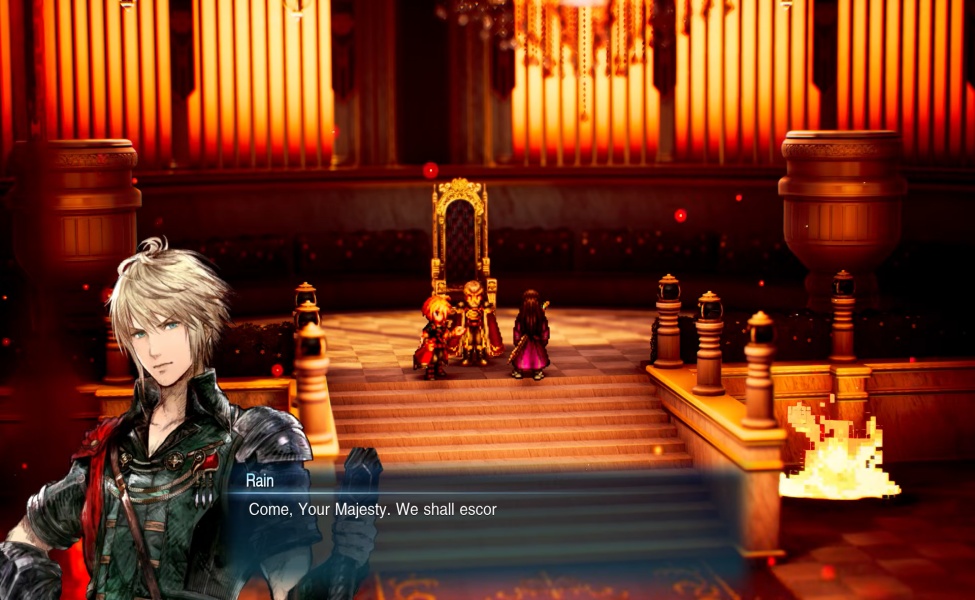
The tone in the early hours of the game runs lighthearted, close to how a Dragon Quest HD-2D title handles its smaller moments. Rain and Lasswell have the classic FF odd-couple banter between the earnest idealist and the cooler-headed realist.
It gets heavier as the story develops, which is the right structure for a narrative about crystal shrines going dark and an armored villain working to accelerate the process.
See Also: Genshin Impact v6.6 Phase 2 Lohen: A Must-Pull or C1 Bait?
Final Fantasy Resonance Release Date
October 22, 2026. Square Enix confirmed this during the June 9, 2026 Nintendo Direct alongside the first full gameplay trailer.
Every official store page on the PlayStation Store, Xbox Marketplace, Steam, and Square Enix’s own site has the date locked in. Pre-orders are live across all platforms right now.
As of June 10, 2026, no demo has been announced. IGN conducted an exclusive 3-hour hands-on preview that covered early story content including a full dungeon at the Mobliz Shipyard (puzzles, a timed escape sequence) and a train boss fight against what sounds like a massive motorbike enemy.
Given Square Enix’s pattern with previous HD-2D releases, a public demo before October is reasonable to expect, and that hands-on content would be the most logical segment to use. Additional trailers and developer interviews are expected in the months ahead.
See Also: MLBB Aspirants 2026 Resale: Release Date, Skins, Draw Costs, and Tips to Get It
Final Fantasy Resonance Platforms & Tech Specs
The title is launching as a fully multiplatform experience, maximizing accessibility without sacrificing the visual depth of its evolved HD-2D engine.
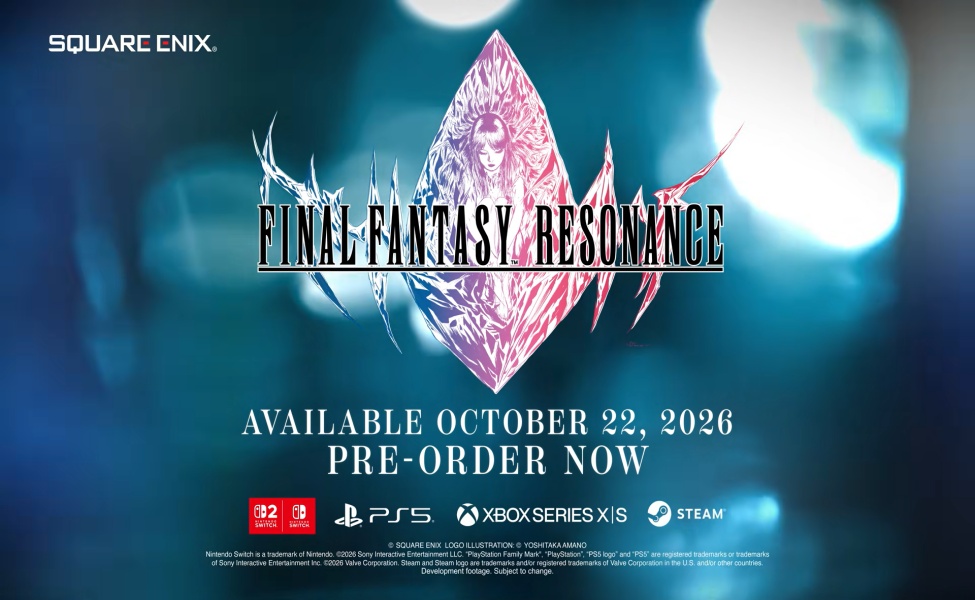
The game will be available on the Nintendo Switch, Nintendo Switch 2, PlayStation 5, Xbox Series X|S, and PC (via Steam and the Microsoft Store).
Visually, the developers are utilizing an advanced iteration of the engine seen in Octopath Traveler II and Triangle Strategy.
This “Cinematic Pixel” style pairs highly detailed, fluidly animated 2D character sprites with deep 3D environments, complete with dynamic camera tracking during intense boss encounters and bespoke CGI sequences for major narrative milestones.
On PC, the optimization target keeps things remarkably accessible, allowing mid-range setups to hit a flawless 60 frames per second at maximum settings.
| Spec Tier | Target Performance | CPU Requirements | RAM | GPU Requirements | Storage |
|---|---|---|---|---|---|
| Minimum | 1080p / 30 FPS (Low) | AMD Ryzen 3 2300X / Intel Core i3-8100 | 8 GB | AMD Radeon RX 6400 / NVIDIA GTX 1650 / Intel Arc A580 | 15 GB SSD |
| Recommended | 1080p / 60 FPS (Highest) | AMD Ryzen 5 2500X / Intel Core i3-8100 equivalent or better | 8 GB |
Visuals and Audio
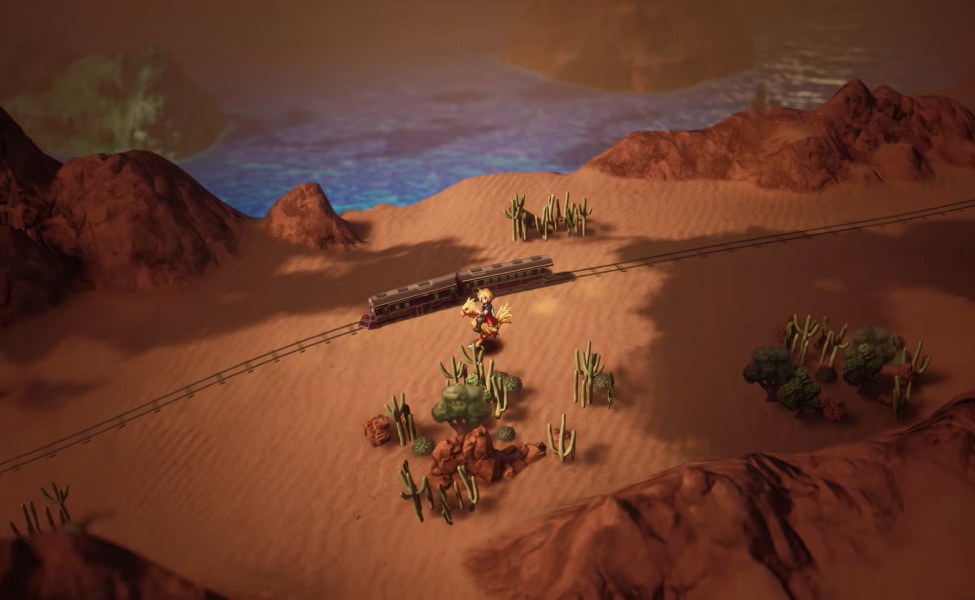
The visual upgrade over Octopath Traveler II is clear in the released footage. Environments are more detailed, pixel character models are more expressive, and the CGI sequences during Vision summons carry real production quality.
IGN’s preview noted an initial “uncanny valley” quality during the earliest Vision calls, but those sequences are skippable after the first viewing. After 80 hours in a JRPG, nobody wants a 30-second unskippable animation on every summon.
The soundtrack blends original Brave Exvius compositions, classic FF leitmotifs that veterans will pick out immediately, and 33 newly written songs. The Collector’s Edition includes the full 4-disc set with all 120 tracks.
See Also: MLBB x Sanrio 2026: Gacha Math & Optimal Bingo Guide
Final Fantasy Resonance Characters & Story
And the core of our excitement is in the flow of combat. This title skips the Active Time Battle (ATB) loops of recent entries entirely, opting for a stiff and predictable Timeline Battle System that feels quite similar to Final Fantasy X or Honkai: Star Rail.
The turn order is clearly visible on the HUD, transforming each encounter into a chess match where survival hinges on turn manipulation, speed buffs, and delay-inflicting skills.
Core Party Members

Rain (English: Clifford Chapin / Japanese: Nobuhiko Okamoto) leads the party. He’s a young knight and airship squadron commander from the Kingdom of Grandshelt with a complicated father backstory woven through his character arc.
His combat role is a sword-focused physical attacker, straightforward baseline, but his kit creates strong offensive synergy with the right Vision equipped.

Lasswell is Rain’s childhood friend and the more measured counterpart to Rain’s idealism. He covers the balanced knight role: capable attacker, capable support, nothing extreme in either direction. The classic paired-protagonist structure, and it works here because the two genuinely play off each other well in the preview footage.

Fina is the most mechanically distinct member of the party. She’s an amnesiac girl with a direct connection to the crystals, and Resonance casts her as the dedicated Esper summoner rather than giving her a Vision slot like the other three.
She unlocks Espers through optional dungeon boss fights across the overworld, adding a separate support toolkit that expands as you pursue side content. Siren for healing and status, Ramuh for lightning and field control, and more are in the game.
Lid joins later in the story. The gadget-engineer archetype occupying the Cid-adjacent slot, with tools and support as her primary combat identity. Edgar from Final Fantasy VI is the obvious series parallel, and the analogy is earned.
Story (Light Spoilers Only)
Rain and Lasswell investigate the failing Earth Shrine in Grandshelt and clash with Veritas of the Dark, an armored villain who shatters the crystal and opens the game’s main conflict.
They find Fina shortly after, retrieve her from inside a crystal with no memory of who she is, and the party’s central mission becomes traveling across multiple continents to protect the remaining crystals before the same thing happens to them.
It’s a classic FF premise and the game doesn’t try to hide that. The lighthearted first act gives way to harder narrative territory as the story develops, with themes around fate and family that the official descriptions suggest the writing actually earns rather than just gestures at.
Main story completion runs 30-40 hours. A full completionist run with all side content is 60-80 hours or more.
See Also: Brawl Stars Tier List: Crush the 2026 Shutdown Meta
Final Fantasy Resonance Gameplay: Combat, Stagger, and the Visions System
Resonance uses pure turn-based combat with a visible timeline at the top of the screen showing the full action order for your party and all enemies in the current fight.
There’s no Active Time Battle gauge. No real-time movement. No dodge timing. The closest comparison points are Final Fantasy X and Octopath Traveler rather than FFXVI or FFVII Rebirth.
Seeing the turn order isn’t just a visual flourish; it’s a mechanical advantage. You can see exactly when the enemy’s big attack goes into the queue, determine how many turns you’ve got to play with before it resolves, and decide if it’s worth using a speed buff or delay ability now relative to the damage setup you need.
Just the sort of real tension turn-based combat is built for, the pressure of having a boss queue something like a party-wide ultimate while your healer is still three turns away from getting a turn. It’s different in that you can plan for it, unlike older FF entries.
Stagger, Break Gauges, and the Resonance Attack
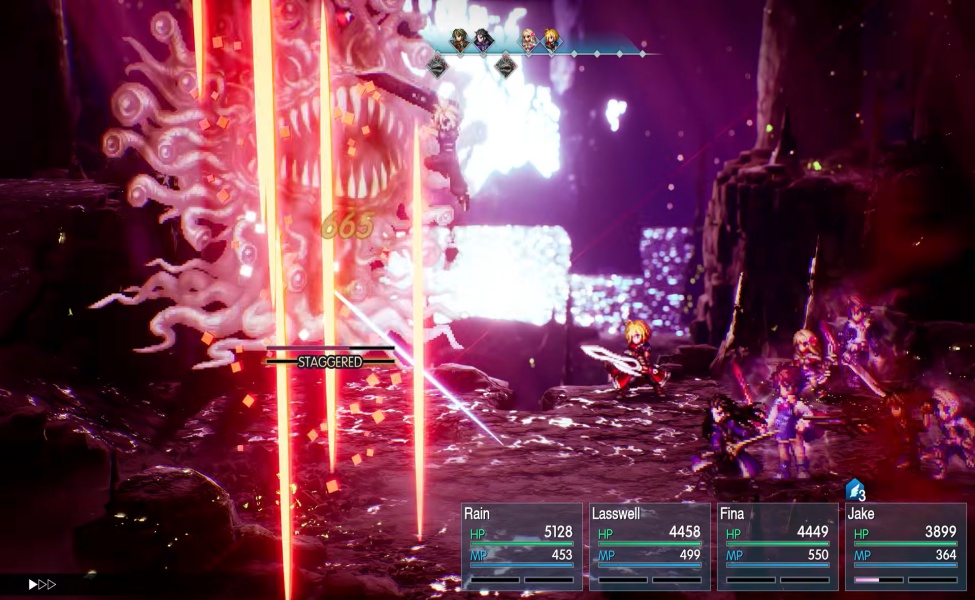
Every enemy has a break gauge. Hitting elemental weaknesses depletes it faster than neutral damage. Once it empties, the enemy staggers and takes increased damage for the remainder of that phase.
Stagger a single enemy and the character who landed the breaking hit gets a free bonus turn immediately. That’s useful on its own. But staggering every enemy on the field at the same time triggers something bigger.
That’s when Resonance activates. You call one equipped Vision, a cinematic sequence plays, and your full party unloads a coordinated attack using that Vision’s abilities for massive damage or a major team-wide support effect.
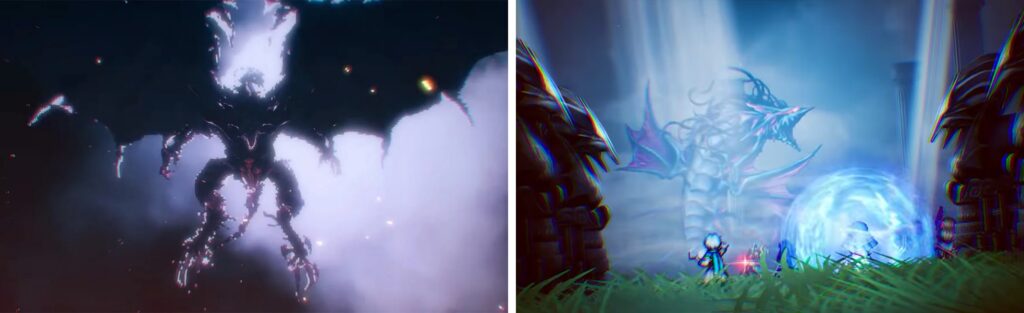
IGN described the moment as “snowball combat”: a well-executed break turn chains into a Resonance attack that completely resets the damage math of the fight.
The tactical problem Resonance asks you to solve is timing simultaneous breaks across multiple enemies with different elemental weaknesses and different health pools. Getting there through good elemental coverage and proper turn management is where the system’s depth actually lives.
The loop will feel familiar to anyone who spent time with FFX’s Overdrive system or Octopath Traveler’s Boost mechanic, but the multi-enemy simultaneous stagger requirement adds a coordination layer that neither of those games demanded in quite the same way.
The Visions System: Gacha Without Gacha
Each party member equips one Vision, which functions as a job stone in FFV terms. Visions are phantoms of legendary Final Fantasy characters from across the series’ history.
Equipping one gives the host character access to that Vision’s skill set, elemental coverage, passive abilities, and a limit-burst style special attack. Each Vision levels up on its own progression tree.
Confirmed from the trailers and IGN’s preview: Warrior of Light (FFI), Terra (FFVI), Cloud (FFVII), Zidane (FFIX), Tidus (FFX), Shantotto (FFXI), Y’shtola (FFXIV), and more yet to be revealed. The cross-class passive mixing is the part that brings the FFV comparison home.
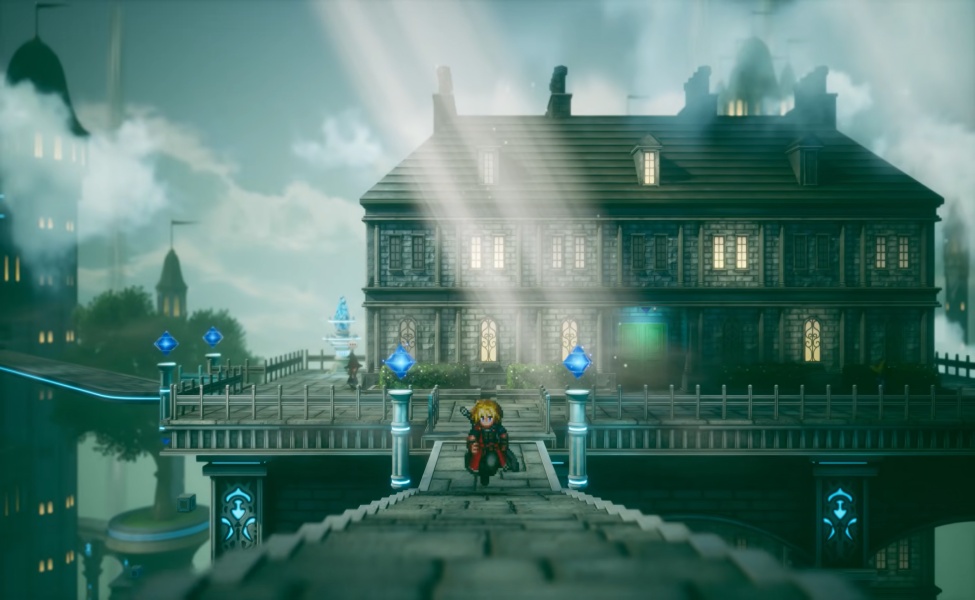
Running Cloud’s Counter passive while using Tidus’s Time Mage actives is a confirmed viable build path. That kind of inherited-skill customization, mixing one Vision’s passive layer onto another’s active kit, is where the buildcraft for harder fights like the Chamber of Arms gauntlets will focus.
You unlock Visions at overworld shrines. The process involves a dream montage of scenes from the Vision character’s original game, followed by a lore quiz testing knowledge of that entry.
Veterans who know which job class Tidus focused on or what Shantotto’s academic specialty was will clear these quickly. For newer players, the quizzes serve as an introduction to the older games. The game warns upfront that some answers may reveal plot points from earlier titles, which is the right disclosure to make.
No random rates. No summoning currency. No limited-time banners. You play the game and unlock Visions through exploration and story progression.
Fina’s Esper Layer
Fina’s Esper system adds a third customization axis on top of Visions. She unlocks each Esper through an optional boss fight accessed in dedicated overworld dungeons.
These aren’t story-gated; you choose to pursue them or not. Siren covers healing and status recovery. Ramuh brings lightning damage and field control. Additional Espers are in the game with more details expected before release.
The system naturally rewards thorough exploration and creates meaningful choices about how deep you want your support toolkit to run before heading into harder content.
Final Fantasy Resonance Side Content and Endgame
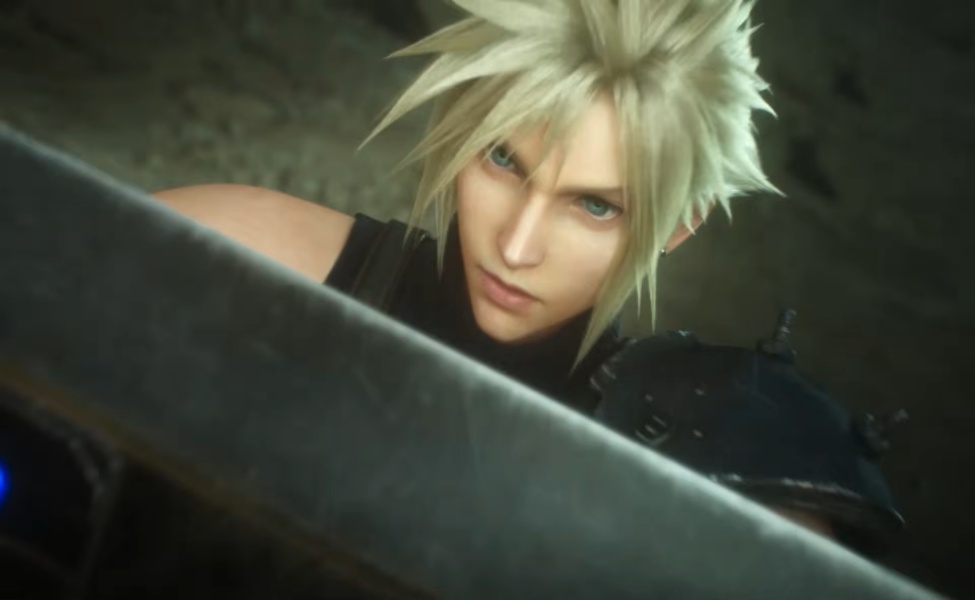
The 30-40 hour main story estimate vs the 60-80+ hour completionist estimate is due to how packed Resonance is.
The overworld covers multiple continents, accessed by airship and chocobo, with towns like Dwarves Forge (complete with “Lali-ho!” dialogue from the Dwarves, a classic callback), dungeons built around environmental puzzles and timed escape sequences, and optional areas gated behind progress or party strength.
Side content includes a Colosseum with escalating monster battles, random Gilgamesh (the series’ recurring villain, dating back to FFVIII) encounters throughout the overworld, a Chamber of Arms with legendary weapon boss gauntlets, optional Esper dungeons to unlock Fina’s full summon set, and the Ultima Weapon as the primary end-game target. That’s a good line-up for players who want to go beyond the story credits.
The endgame content to prep for is the Chamber of Arms fights. Picking the right Vision passives for a particular matchup, working out how to get simultaneous breaks on a multi-phase boss before it uses its party-wiping attack, and finding the accessory combination that allows your team to survive the punishment phase; these are the kinds of problems that occupy turn-based JRPG players for hundreds of hours. This is where the damage ceiling and the grind for the rare material for the best gear will be.
Final Fantasy Resonance Price & Editions
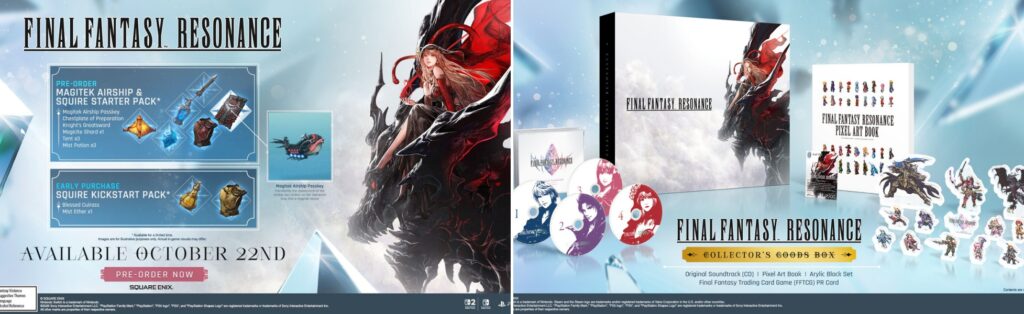
Square Enix confirmed three purchase tiers for the October 22, 2026 launch.
Standard Edition: $49.99 on all platforms, physical and digital. Includes the base game and pre-order bonuses (exact items not yet detailed, historically early-game gear or cosmetics in Square Enix RPG releases). The $50 price point is the right call for a mid-budget AA RPG at this scope and length. It’s not priced at the AAA $70 ceiling, and the value-to-length ratio at that price is strong.
Digital Deluxe Edition: $59.99. Base game plus the Magitek & Grimoire Deluxe Pack, which includes useful in-game items, resources, and gear. For players who want a smoother early-game progression without committing to the full physical goods box, this is a reasonable middle option.
Collector’s Edition: $209.99. The full physical package: the base game, a Digital Deluxe code, a 120-page hardcover pixel art book, a 4-disc original soundtrack with 120 tracks, an exclusive Final Fantasy Trading Card Game promo card featuring Dark Fina (card code 8-042L), and an acrylic block set featuring pixel art of characters, summons, and bosses.
A standalone Goods Box without the game retails separately at approximately $135-150 for players who prefer a digital copy. Limited stock is already moving fast and some retailers are showing low availability. If the physical goods are the goal, the window to act is now.
Regional pricing varies from the listed MSRP, and the full pre-order bonus details for the Standard Edition are still pending official confirmation.
See Also: How to Get Goku in Sailor Piece: Spirit Warrior Guide (2026)
Final Fantasy Resonance tackles the question the FF community has been asking since the series went action combat: can Square Enix craft a turn-based mainline game with real party depth, a proper world to explore, and enough endgame difficulty to justify serious buildcraft? According to everything we’ve seen from the June 9 reveal and the hands-on coverage after, yes.
Visions system addresses the collection appeal of the original mobile game without the predatory mechanics. Stagger/Resonance combat loop applies tactical pressure with a satisfying reward.
The endgame of the Chamber of Arms is a target for veterans to grind for. And the $49.99 price point makes it the kind of entry that doesn’t take a second thought.
October 22, 2026 is four months out. There’s more coverage coming before then: more trailer footage, probably a demo, and deeper developer interviews as Square Enix builds toward launch.
If you’re going into Resonance properly, that means lining up the Digital Deluxe or Collector’s Edition and having your platform wallet ready to go on day one. Before the launch window arrives, top up Steam Wallet through Joytify.
Fast, secure, and affordable digital wallet top-ups mean you’re funded and ready to purchase the moment the game goes live, with no payment friction when pre-order deadlines tighten.
A 60-80 hour JRPG with strong DLC potential is exactly the kind of purchase you want handled in advance. Joytify makes that straightforward.
TL;DR
- Final Fantasy Resonance is a turn-based RPG and the first mainline title using the HD-2D engine, set to release on October 22, 2026.
- The game is a ground-up remake of the first story arc from Final Fantasy Brave Exvius, featuring no gacha mechanics and a premium single-player experience.
- It introduces a new combat system with a visible timeline and a Stagger/Resonance mechanic that enhances tactical depth in battles.
PakarPBN
A Private Blog Network (PBN) is a collection of websites that are controlled by a single individual or organization and used primarily to build backlinks to a “money site” in order to influence its ranking in search engines such as Google. The core idea behind a PBN is based on the importance of backlinks in Google’s ranking algorithm. Since Google views backlinks as signals of authority and trust, some website owners attempt to artificially create these signals through a controlled network of sites.
In a typical PBN setup, the owner acquires expired or aged domains that already have existing authority, backlinks, and history. These domains are rebuilt with new content and hosted separately, often using different IP addresses, hosting providers, themes, and ownership details to make them appear unrelated. Within the content published on these sites, links are strategically placed that point to the main website the owner wants to rank higher. By doing this, the owner attempts to pass link equity (also known as “link juice”) from the PBN sites to the target website.
The purpose of a PBN is to give the impression that the target website is naturally earning links from multiple independent sources. If done effectively, this can temporarily improve keyword rankings, increase organic visibility, and drive more traffic from search results.